Live Dealer Blackjack BetMGM Borgata Atlantic City Feed Latency: The Raw Truth
Anyone chasing Live Dealer Blackjack BetMGM Borgata Atlantic City action from outside the physical floor needs to understand one brutal fact: the stream you see is never the hand you are dealt in real time. The gap between the dealer's physical card flip and the pixels hitting your screen is a measurable, exploitable, and often infuriating variable — and it decides whether your edge survives the round.

I have torn apart feed latency pipelines across dozens of studios, and the BetMGM Borgata Atlantic City deployment is a special animal. This is a land-based casino feed rebroadcast through a licensed digital skin, which means you are stacking multiple encoding hops on top of a physical floor capture. Every layer adds delay, and delay is where casual players bleed chips without ever knowing why. 😤
Why the Atlantic City Studio Feed Behaves Differently
The Borgata setup pulls from an actual gaming floor environment, not a sealed remote studio. That distinction matters enormously for stream latency. Camera capture happens on the pit floor, gets encoded through on-site hardware, then routes to the operator's ingestion servers before it ever reaches your device. Each handoff introduces buffering decisions, and those decisions are tuned for stability, not speed.
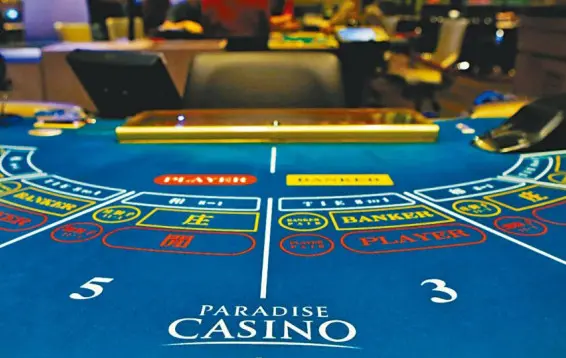
What does that mean in practice? The dealer's hole card is already resolved in the physical world while your client is still rendering the previous action. If you are timing bets against what you perceive as "live," you are reacting to a ghost. The house does not need to cheat you — physics and packet routing already hand them the informational edge.
Deconstructing the Latency Stack
Break the pipeline into its honest components and the numbers stop being abstract. Capture-to-encode eats the first chunk. CDN edge distribution eats the next. Client-side decode and render buffer swallows the rest. In a typical Atlantic City feed configuration, you are looking at a cumulative delay that ranges well beyond what any remote-studio competitor delivers. Operators rarely publish these figures, and that silence is deliberate.
Here is the part that gets my blood up: the variance is worse than the average. Jitter spikes during peak wagering hours turn a tolerable delay into a chaotic one. A player who calibrates their timing on a quiet Tuesday morning gets wrecked on a Saturday night because the buffer strategy shifts under load. 🎯
The Hardware and Encoding Underbelly
Most of the lag does not live in the network — it lives in the encoder. Hardware capture cards running aggressive compression profiles prioritize bandwidth savings over frame accuracy. When the bitrate governor kicks in, frame timestamps drift, and the client's synchronization logic compensates by adding buffer. Every compensation is a tax on your reaction window. The physical dealer never feels it. You do.
Auditing this properly means timestamping the physical card release against the client render frame across hundreds of hands. Do that once and you will never again trust a "live" badge at face value. The Live Dealer Blackjack BetMGM Borgata Atlantic City feed is legitimate, licensed, and fully compliant — and it is still structurally slower than the felt in front of the dealer's hands.
What Sharp Players Do With This Knowledge
You cannot eliminate feed latency, so you weaponize your understanding of it. Treat every visible card as historical data, not current state. Size your decisions on the expected state of the shoe rather than the rendered frame. And demand transparency on jitter metrics from any platform you fund — if they cannot tell you their p95 delay, they are hiding a structural disadvantage behind a glossy interface. 💡
The moment a feed crosses roughly 400 milliseconds of cumulative delay, the informational asymmetry stops being a rounding error and becomes a governing variable in every single hand you play.